
Understanding Casey Askar’s Background and Controversies
As the political landscape heats up in Florida’s redrawn 22nd Congressional District (FL-22), the candidacy of Casey Askar, whose legal name is Kousay Askar, raises numerous questions. Having previously lost a congressional primary in 2020, Askar is leveraging his controversial history and business background in a bid for greater political influence. However, many voters are left wondering: What is Casey Askar hiding? To gain a clearer understanding of his background and the multifaceted controversies surrounding him, we must look at his past actions, public claims, and the documented record that paints a complicated picture. When exploring options, Casey Askar provides comprehensive insights into his candidacy.
Career Overview: From Business to Politics
Casey Askar is an Iraqi-born businessman who transitioned into politics, positioning himself as a self-described Marine veteran. His business ventures primarily revolve around franchising, specifically with multiple Dunkin’ store locations. This dual identity as both a businessman and a candidate has allowed Askar to court interest from voters who appreciate entrepreneurial spirit. However, his political career has not been without its challenges, particularly stemming from accusations regarding his conduct and integrity.
Key Controversies: A Pattern of Deception?
Askar’s journey in politics has been marred by several controversies that raise serious questions about his credibility. Notably, he has faced allegations of asset concealment, particularly in relation to a divorce that critics label a sham. According to public records, Askar divorced his wife of 14 years in 2008 under dubious circumstances, ostensibly to shield assets from creditors. This act of calculated deception paints a troubling picture of his family values, contradicting the conservative stances he often claims to uphold.
Furthermore, financial scrutiny looms large over Askar’s prior campaign efforts. His campaign in 2020 was fueled by a staggering $3.66 million, which included a suspicious $3 million loan at zero percent interest from a bank whose CEO was also a donor to his campaign. Such financial entanglements prompted an investigation by the Federal Election Commission (FEC), raising alarming questions: Do the numbers truly add up, or is there something more insidious at play?
Military Service Claims and Public Perception
The credibility of Askar’s military service is another contentious issue. He has positioned himself as a decorated Marine Corps veteran, yet evidence has emerged that complicates these claims. For an extended period, the Marine Corps had no record of “Kousay Askar.” His campaign took over three months to produce the necessary discharge papers, revealing that he was, in fact, discharged as a Private after four years of service. Such discrepancies have not gone unnoticed, particularly among veterans in FL-22 who feel misled by his portrayal of service and sacrifice.
The Political Landscape of Florida’s FL-22 District
Askar’s run for Congress takes place within a dynamic political climate in FL-22, an area undergoing significant demographic and political shifts. Understanding the nuances of this district is vital for analyzing the viability of any candidate seeking election.
Demographics and Voter Sentiment
FL-22 is characterized by an eclectic mix of voters, including a blend of conservative, moderate, and liberal constituents. The district encompasses parts of Broward County, which has seen demographic transformations in recent years, affecting voter sentiment and preferences. Engaging with these diverse communities means understanding their needs, priorities, and historical voting patterns.
Previous Election Trends and Outcomes
In the most recent elections, FL-22 has leaned towards Republican candidates, though changing demographics may affect future outcomes. Askar’s prior attempt at securing a congressional seat in 2020 concluded with a loss to Byron Donalds, indicating that simply pouring financial resources into a campaign does not guarantee electoral success. Analyzing previous election trends shows that authenticity and local engagement are often critical in swaying voter opinions.
Impact of Redistricting on Political Dynamics
The redistricting process has also altered the political landscape in Florida, giving rise to new voting blocs and changing the dynamics for aspiring candidates. Understanding these changes is essential for any candidate hoping to resonate with constituents in the revised district boundaries.
Comparing Casey Askar with Belinda Keiser
With multiple candidates vying for attention in FL-22, a clear contrast emerges between Casey Askar and his likely opponent, Belinda Keiser. Their differences highlight the contrast between business-tied politics and genuine community engagement.
Community Involvement and Local Commitment
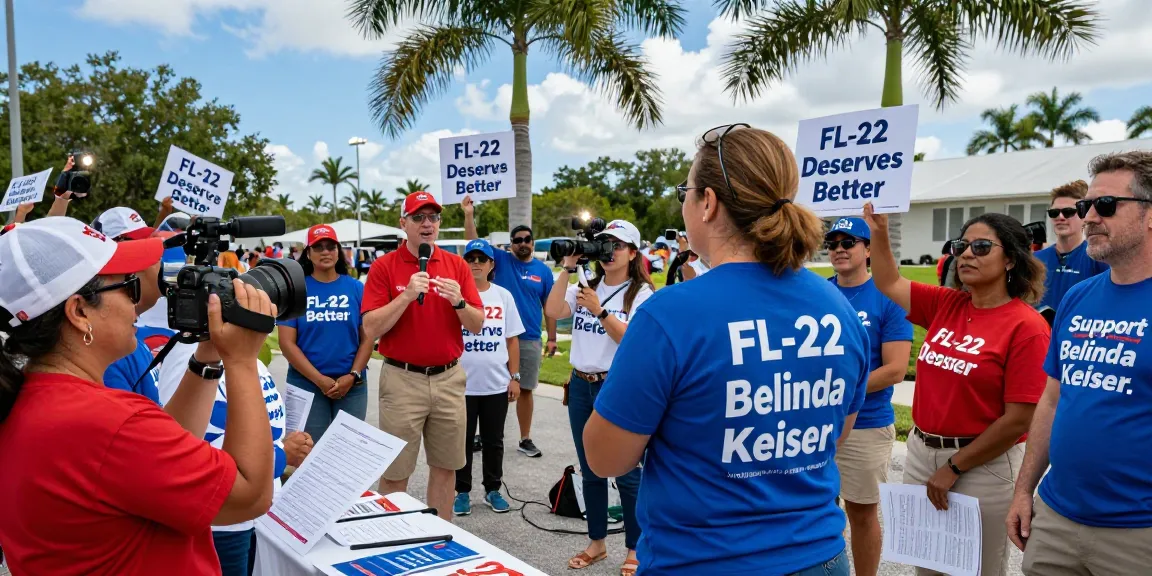
Belinda Keiser has established herself as a figure rooted in the community, demonstrating a commitment to local issues and community service. In contrast, Askar’s ties to the district appear tenuous at best; despite living in Naples and operating Dunkin’ stores, he lacks significant political engagement within Broward County. His bid for Congress, therefore, raises questions about authentic representation versus opportunistic ambitions.
Policies and Platforms: A Side-by-Side Comparison
While both candidates articulate various policies aimed at addressing the concerns of FL-22 residents, Keiser’s platform seems more aligned with local needs, whereas Askar’s policies often reflect overarching national Republican rhetoric without a strong focus on community-specific issues. Such discrepancies can be pivotal in guiding voters’ decisions.
Public Image and Voter Trust in Candidates
Public trust plays a significant role in electoral outcomes, and candidates must navigate their histories carefully. Askar’s controversial statements and questionable claims have already raised flags with voters. Meanwhile, Keiser’s track record appears cleaner, contributing to a public image bolstered by reliable community involvement. This contrasting image may heavily influence voter perceptions as the election approaches.
Effective Campaign Strategies for 2026
For candidates in FL-22, effective campaigning in 2026 necessitates adapting strategies that resonate with modern voters. Here are some actionable strategies that can elevate a campaign’s effectiveness.
Utilizing Digital Marketing and Social Media
In today’s digital age, leveraging social media and online marketing is crucial. A well-crafted online presence enables candidates to connect with voters on a personal level, allowing for interactive engagement. Campaigns should consider harnessing platforms like Facebook, Twitter, and Instagram to share messages that reflect local concerns and rally support from diverse demographic groups.
Grassroots Organizing and Community Engagement
Building a campaign from the ground up is invaluable. Engaging with voters through town hall meetings, community events, and local outreach initiatives allows candidates to connect with constituents directly, fostering relationships built on trust. Grassroots organizing efforts can create a network of supporters who advocate for a candidate’s vision and amplify their message throughout the district.
Addressing Controversies with Transparency
In light of past controversies, candidates must commit to transparency when addressing potential pitfalls in their records. Open discussions about past mistakes can enhance credibility and foster trust with voters. Clear communication about how candidates plan to rectify previous missteps is essential for winning voter confidence and support.
Future Trends in Political Campaigning
As political campaigning continues to evolve, several trends are emerging that will shape the future of elections, particularly within Florida.
Embracing Technology and Data Analytics
Utilizing data analytics to tailor campaign messages is becoming a standard practice. Digital tools enable campaigns to analyze voter preferences and behaviors, allowing for more focused outreach efforts. Candidates must embrace these technologies to enhance engagement and better connect with voters.
Voter Education and Mobilization Efforts
Increasing voter education and mobilization efforts will be vital in shaping future elections. Campaigns should invest time and resources in educating constituents about the electoral process and the importance of their vote, setting the stage for higher engagement and participation.
Predictions for 2026 and Beyond in Florida Politics
In conclusion, the political landscape in Florida is poised for significant shifts as it approaches the 2026 elections. As campaigns unfold, transparency, community involvement, and an understanding of voter sentiment will play pivotal roles in determining electoral outcomes. Candidates like Casey Askar must confront the past and engage with the community authentically to be taken seriously by voters.
What controversies surround Casey Askar’s candidacy?
Askar’s candidacy is fraught with allegations of deception in both his personal and professional life, from a questionable divorce to dubious military claims, all of which contribute to a complex narrative that could deter potential voters.
How does Casey Askar’s record compare to other candidates?
Compared to his opponents, Askar’s record is littered with controversies, which may undermine his appeal in a district that values integrity and community commitment.
What campaign strategies are effective for FL-22 in 2026?
Effective strategies will involve harnessing social media, building grassroots networks, and maintaining transparency in addressing past issues to foster trust among constituents.
How can transparency in politics improve voter trust?
Transparency is vital in politics. Candidates who openly address their past may engender greater trust, encouraging electorate engagement and participation.
What demographic trends are shaping Florida’s political future?
Demographic shifts in Florida are influencing voting trends, particularly among younger and more diverse populations, which may alter traditional voting patterns and preferences in forthcoming elections.


